
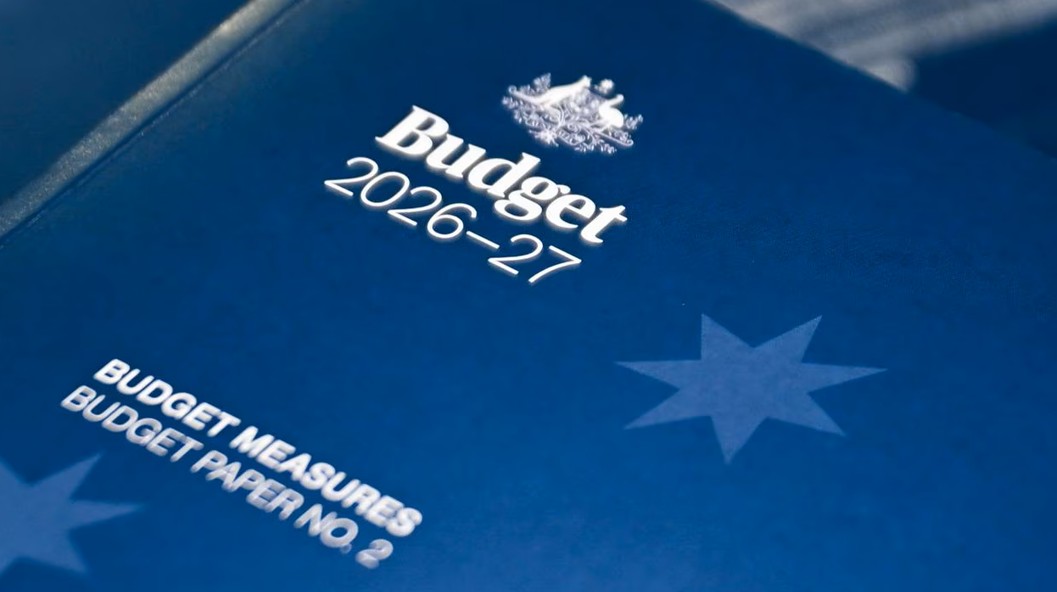
What the 2026 Federal Budget Means for Property
Treasurer Jim Chalmers delivered the 2026–27 Budget on 12 May 2026, framing it as a “housing budget.” The reforms are wide-ranging and affect investors, first home buyers, trust structures and working Australians. Details are still emerging and professional advice is recommended before acting.
Tax Cuts for Working Australians
Two immediate benefits for salary and wage earners: a $250 tax offset and a $1,000 instant work-related deduction (no receipts required). Both improve household cash flow and may support borrowing capacity for prospective buyers.
Further reading: Budget overview
Capital Gains Tax: Three Changes from 1 July 2027
- 50% discount replaced — cost base indexation plus a 30% minimum tax on net capital gains applies to individuals, trusts and partnerships.
- Pre-CGT asset status removed — assets held since before 20 September 1985 become taxable. Only gains after 1 July 2027 are taxed; the market value at that date becomes the new cost base.
- New build exception — investors in newly built homes can still elect the original 50% discount on eventual sale.
| Important: Pre-CGT Assets
If your family holds property acquired before 20 September 1985, review your estate planning and tax position before 1 July 2027. Only post-transition gains will be taxed, but specialist advice is essential. |
Further reading: Pre-CGT assets & indexation
Negative Gearing: New Builds Only from 1 July 2027
Properties held at 7:30pm AEST on 12 May 2026 are fully grandfathered. For established properties purchased after budget night, losses can only offset rental income or residential property capital gains — not wages. Losses carry forward. New builds retain full deductibility against all income.
| Market Impact Watch
Treasury modelling projects house price growth moderating from ~6% to ~4% annually for a couple of years. An estimated 75,000 additional owner-occupied properties are expected to enter the market over a decade. Budget papers estimate the rent impact at less than $2 per week at current median rents. |
Further reading: Negative gearing breakdown
Discretionary Trust and Bucket Company Reforms
From 1 July 2028, a 30% minimum tax applies to discretionary trust income. Around 80,000 companies received trust distributions in 2022–23; 83% had no other business activity — the so-called “bucket company” strategy is the direct target. Corporate beneficiaries receive no credit for tax already paid by the trust, creating a deliberate double-taxation effect. Individual beneficiaries receive a non-refundable credit.
| Rollover Relief Available
Three-year rollover relief from 1 July 2027 allows restructuring out of a discretionary trust without triggering CGT. Around 40% of the 350,000 small businesses using trusts may need to restructure or pay additional tax. Act early — the window is shorter than it looks. |
Further reading: Trust minimum tax explained
First Home Buyer Support
- Help to Buy — government takes up to 40% equity in a new home (30% existing). Minimum 2% deposit, no LMI. Income caps: $100,000 individual / $160,000 couple. Available via CBA and Bank Australia now, more lenders joining in 2026.
- $10 billion housing fund — 100,000 homes built exclusively for first home buyers at below-market prices, construction starting in 2026–27.
- 5% Deposit Scheme continues — 10,000 places per year, no LMI. Regional Guarantee and Family Home Guarantee (2% for single parents) also continue.
Further reading: Help to Buy
$47 Billion Housing Investment & Foreign Buyer Ban
Total federal housing investment reaches a record $47 billion. A new $2 billion Essential Infrastructure Fund unlocks roads, power and drainage for an estimated 65,000 new homes over the next decade. The ban on foreign buyers purchasing existing residential properties has been extended; new builds remain open to foreign investment.
Further reading: Budget overview
R&D and Venture Capital: Enhanced but Not Exempt from CGT
R&D and venture capital incentives are being boosted with higher rates and broader eligibility. However, there is no carve-out from the CGT changes for employee share schemes or startup founders — they face the same CGT treatment as all other investors from 1 July 2027.
Further reading: Budget summary: every tax measure
Key Dates at a Glance
- 12 May 2026 — grandfathering cut-off: properties and assets held at 7:30pm AEST are protected.
- 1 July 2027 — CGT and negative gearing changes take effect; pre-CGT status removed with market value reset; trust restructuring rollover relief window opens.
- 1 July 2028 — discretionary trust 30% minimum tax begins.
A practical next step is understanding how these proposed changes may apply to your specific circumstances. Every structure, investment strategy and long-term goal is different, so discovering your individual position and what these reforms could mean for you financially is essential. We strongly recommend having a conversation with your accountant or trusted financial adviser before making any property, tax or restructuring decisions.
Disclaimer: General informational purposes only. Not financial, tax or legal advice. Budget measures subject to parliamentary approval. Always seek independent professional advice before making property or investment decisions.